Our Approaches
Experiential Learning Approach
Working closely with Professor Colin Beard over the past few years, have exposed us to his Holistic Experiential Learning Theory (HELT), which is an approach we find makes the most sense when approaching systems work.
Whether it is the individual, the group/team, the organisation and/or the inter-organisations, we are all experiencing some form of disconnect - with self and with each other.
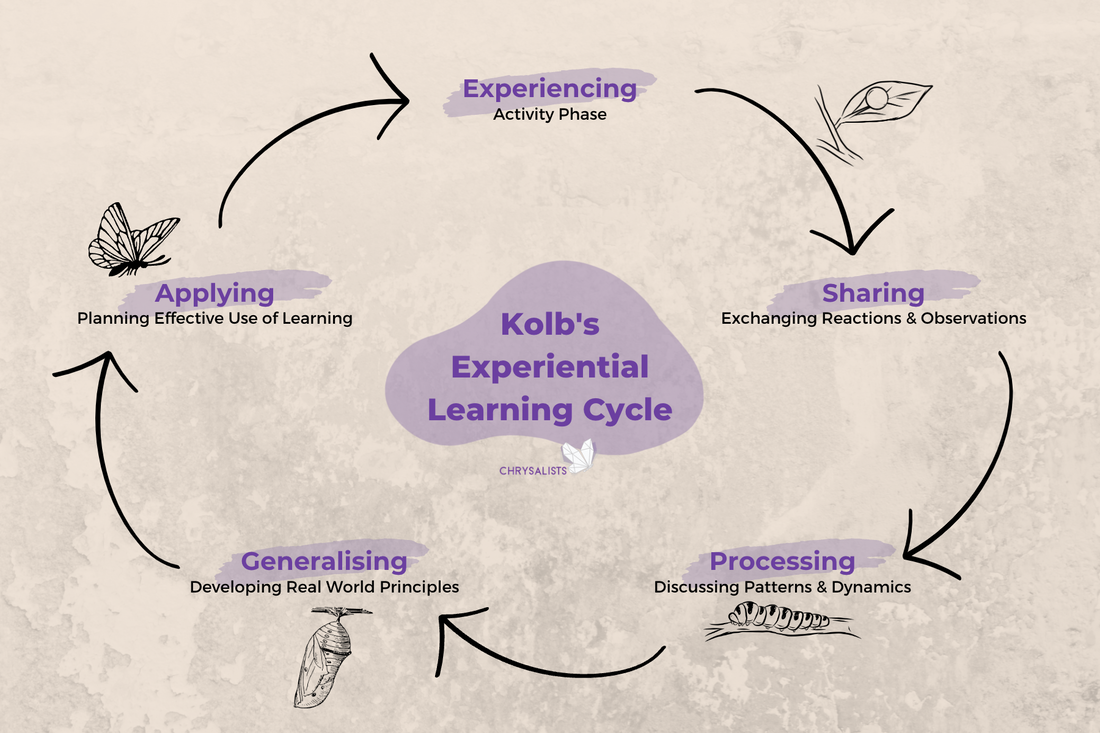
And it is a great combination of the initial approaches we were using : the Humanistic Approach and David Kolb's (outdated) Experiential Learning Approach.
Whether it is the individual, the group/team, the organisation and/or the inter-organisations, we are all experiencing some form of disconnect - with self and with each other.
And it is a great combination of the initial approaches we were using : the Humanistic Approach and David Kolb's (outdated) Experiential Learning Approach.
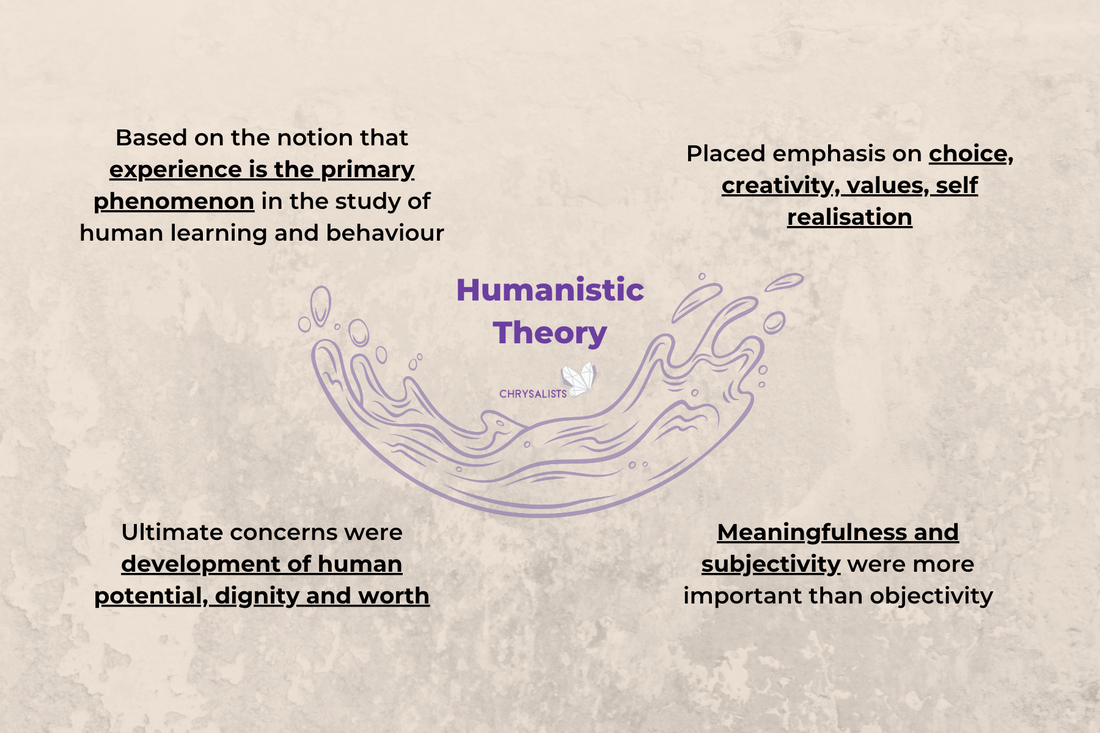
Often regarded as the “third force” is psychology, the Humanistic Approach was developed by two leading psychology theorists, Abraham Maslow and Carl Rogers. It looks at the person as a whole – or the “whole person” – considering the individual’s perspectives of his/her own behaviours in relation to his/her experiences. The approach leverages on counselling and facilitation techniques to collect the data of the experience and the behaviours, and even though it may be a more subjective (unscientific) approach, it provides a more holistic viewpoint to who the person is, with the ability to look deeper into his/her values and identity.
The approach recognises human beings as part of nature, and holds that values have their source in human experience and culture. The principle it follows is that all people have a need for positive regard, resulting from an underlying wish to be loved and respected.
This is in line with where we are heading in the 21st Century, looking deeper into oneself, identifying one’s purpose through the understanding of our values.
The approach recognises human beings as part of nature, and holds that values have their source in human experience and culture. The principle it follows is that all people have a need for positive regard, resulting from an underlying wish to be loved and respected.
This is in line with where we are heading in the 21st Century, looking deeper into oneself, identifying one’s purpose through the understanding of our values.
All our offerings are aligned to the belief based on the butterfly effect: small change, big impact. We start by raising awareness, creating understanding, and then taking action. Starting from self, moving to community, one small step, one small change at a time; allowing the results to ripple through individuals, impacting the community at large.
We strongly believe in experiential learning process, as life is about experiencing. We reinforce the importance of reflections in the process, by purposefully setting aside time and resource, to allow participants to be with their thoughts and emotions, digesting their learning in bite-sizes, among the flurry of activities.
The Holistic Experiential Learning Model (HELM), which we apply more of in our facilitation work, also connects very neatly and nicely to our coaching approaches (individual coaching through Satir and group coaching through Action Learning) and organisational development approach - Gestalt Organisational Development approach.
References :
- http://infed.org/mobi/carl-rogers-core-conditions-and-education/
- http://www.sparknotes.com/psychology/psych101/personality/section4.rhtml
- https://www.khanacademy.org/test-prep/mcat/behavior/theories-personality/v/humanistic-theory
- https://www.boundless.com/psychology/textbooks/boundless-psychology-textbook/personality-16/humanistic-perspectives-on-personality-78/maslow-s-humanistic-theory-of-personality-307-12842/
- http://www.psychlotron.org.uk/newResources/approaches/AS_AQB_approaches_HumanisticBasics.pdf
- https://prezi.com/1hadi-f_gya6/the-humanistic-approach
Gestalt Organisational Development Approach
The Gestalt approach to Organizational Development (OD) is rooted in the belief that an organization is a living, breathing "whole" that is greater than the sum of its parts. Derived from Gestalt psychology, this approach focuses on awareness, presence, and the "here and now" of organisational life.
Unlike traditional OD, which might focus heavily on data and structural restructuring, Gestalt OD focuses on the quality of contact between individuals and the system.
The Gestalt approach is deeply aligned with our Chrysalists' Slow Impact philosophy and the Butterfly Story.
- Non-Interference: Much like the man who shouldn't have snipped the cocoon, a Gestalt practitioner doesn't "fix" the system. They provide the awareness and support that allows the system to find its own way through the struggle.
- Systemic Metamorphosis: By increasing awareness, you allow the "imaginal cells" (new ideas/leaders) to be integrated into the whole rather than being rejected by the "immune system" of the old culture.